


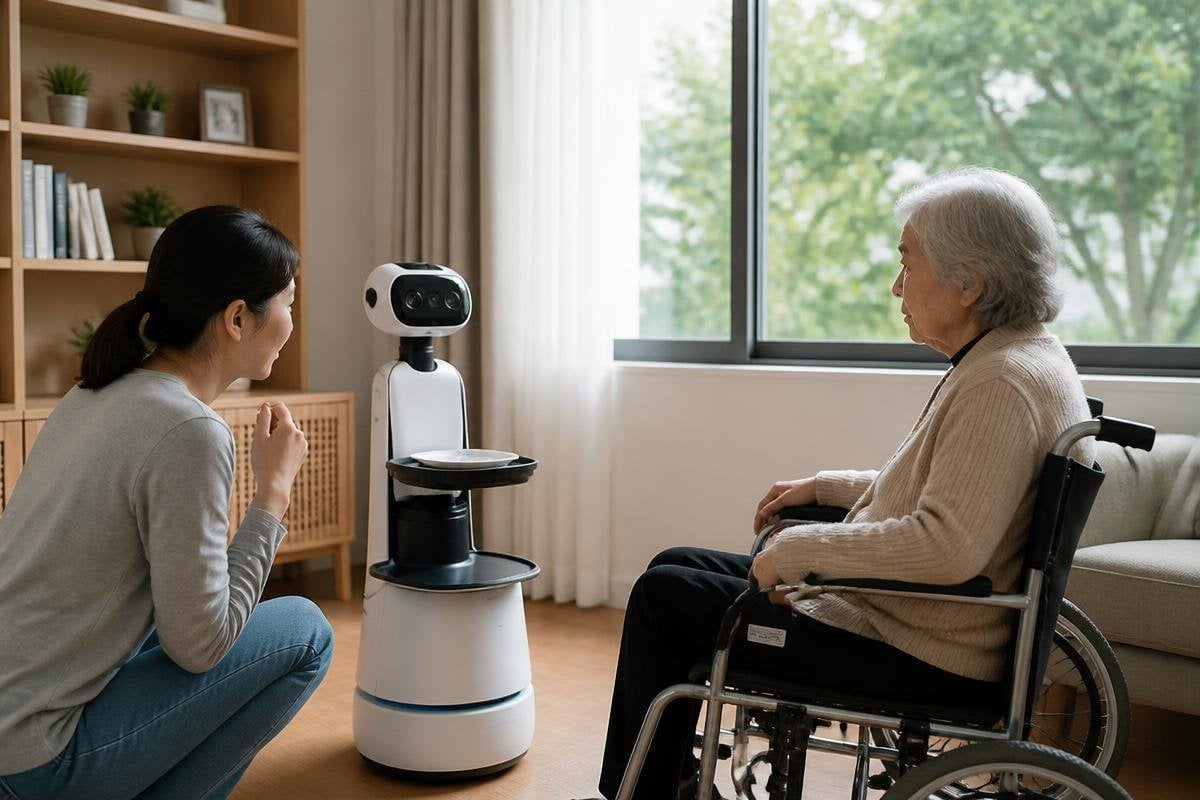
A care robot may remind someone to take medicine, call for help after a fall, or help them stay in touch with family. Each task sounds practical until the robot enters a bedroom, handles private data, or makes a choice for someone who cannot answer.
Quick read:
- Care requires consent that can change over time
- Cameras and microphones turn private rooms into monitored spaces
- A robot can assist care, but people still need clear responsibility
Care starts with consent
A person may agree to a robot in the morning and reject it by evening. Pain, illness, fear, or confusion can change what they understand and what they want. Consent needs regular checks, not one signature at the start of a trial.
The robot should explain each task in plain language before it acts. “I’m going to remind you about your 8 a.m. medicine” gives the person a chance to refuse. A silent alert, automatic room check, or locked door creates a different moral problem because the person may not know what happened.
Family members and care workers also need clear limits. Their concern for someone’s safety doesn’t give them unlimited access to the person’s camera feed, location, or conversations.
The person receiving care should have the strongest say whenever they can make that choice.
Safety can conflict with freedom
A care robot may stop someone from walking into a dangerous area. It may also stop them from making a choice that carries some risk. That line matters in homes, where people have always made daily decisions for themselves.
A system that blocks a door, changes a bed position, or calls an emergency contact needs rules people can inspect. The person should know who set those rules, when they apply, and how to challenge a decision. A family member’s preference should not quietly become the robot’s command.
Safety also has a time limit. A robot that calls for help after a fall may act on a useful signal, but it still needs a way to handle false alarms. Repeated calls can upset the person, waste staff time, and make them less willing to keep the system in the home.
Privacy follows the robot home
Care robots may use cameras, microphones, motion sensors, and health records. Those tools can help spot a fall or missed meal, yet they also create a detailed record of daily life. A bedroom is not a factory floor.
The data question is specific: what does the robot collect, where does it go, who can view it, and when is it deleted? A microphone that listens for a fall should not quietly become a record of every family conversation. A location log should have a stated purpose and a set storage period.
A care robot’s data rules still leave responsibility with people: someone must decide what the system may do and answer when it fails. Robot 24 can tie that duty to named machines, operators, and reported tests before the next section looks at families and staff.
People still carry the duty
The robot can perform a task, but it cannot carry moral responsibility in the human sense. The company that builds it, the care provider that installs it, and the family that relies on it each need a named duty.
If a medication reminder fails, someone must know what to check next. If the robot misses a fall, the repair process must be clear. If the system records a private conversation, someone must answer for that collection and explain what happened.
The human role also needs protection. A robot may reduce routine checks, yet care includes touch, judgment, patience, and conversation. Replacing every human visit with a screen and a motor could leave a person physically monitored and socially isolated.
A practical test before use
Before a care robot enters someone’s home, check these points with the person, family, and care team:
- Consent: Can the person pause, refuse, or remove each feature without asking permission?
- Data: Are the camera, microphone, sensor, and health-record settings written in plain language?
- Control: Who can change rules, see alerts, or access recordings?
- Failure: What happens after a missed reminder, false alarm, lost network connection, or dead battery?
- Human help: Which care tasks still require a person to visit, speak, or make a decision?
- Review: When will the team check if the robot still fits the person’s wishes?
The strongest system will be the one that makes its limits visible. I’d reject any care robot that treats constant monitoring as the price of receiving help.
A useful next step is a written care agreement with the robot’s tasks, data settings, human contact, and review date. Without those details, the machine may be doing work, while nobody can say who is responsible for the result.
