


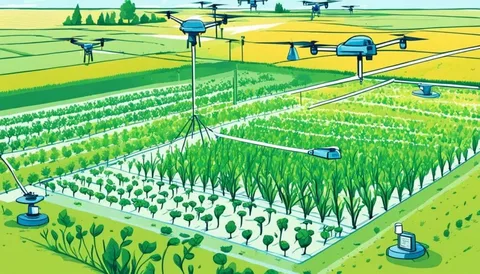
In recent years, the agricultural industry has undergone significant changes, driven by advancements in technology and data science. One of the most exciting developments is the rise of precision agriculture, a method that leverages innovative tools to enhance farming efficiency, productivity, and sustainability. Revolutionizing farming through precision agriculture is poised to be the cornerstone of future farming practices, offering solutions to many of the challenges facing the industry today.
What is Precision Agriculture?
Precision agriculture refers to a farming management concept that uses advanced technology, including sensors, GPS, and data analytics, to optimize crop production. By collecting real-time data from fields, farmers can make informed decisions that minimize waste, improve yields, and reduce environmental impact. The goal of precision agriculture is to ensure that each square inch of farmland is utilized to its full potential, maximizing output while minimizing resource use.
How Technology is Shaping the Future of Farming
1. Drones and Satellites: Aerial Monitoring at Its Best
Drones and satellite technology have taken monitoring to new heights—literally. By using aerial imagery, farmers can assess the health of crops, monitor soil moisture levels, and even detect pest infestations. These technologies enable farmers to identify problem areas quickly, leading to faster intervention and reducing the need for pesticides or fertilizers across the entire field.
2. Soil Sensors and Automated Irrigation Systems
Soil sensors are another critical element in revolutionizing farming. These sensors gather real-time data about soil moisture, temperature, and nutrient levels. This information helps farmers optimize irrigation schedules and fertilizer applications, ensuring that crops receive exactly what they need. Automated irrigation systems, integrated with these sensors, can water crops based on precise soil conditions, saving both water and energy.
3. Artificial Intelligence (AI) and Machine Learning
AI and machine learning are making precision agriculture smarter. By analyzing vast amounts of data from various sources, these technologies can predict crop yields, monitor growth patterns, and even identify potential diseases before they spread. With predictive analytics, farmers can implement proactive measures, preventing problems and optimizing harvest outcomes.
Benefits of Precision Agriculture
1. Increased Productivity and Crop Yields
One of the most significant advantages of precision agriculture is the potential for increased productivity. By optimizing the use of inputs like water, fertilizer, and pesticides, farmers can ensure that crops grow in the most favorable conditions, leading to higher yields. Precision farming tools also help farmers focus their efforts on high-value areas of their land, which leads to better overall resource allocation.
2. Sustainability and Reduced Environmental Impact
As the world faces mounting pressure to address climate change, revolutionizing farming practices with precision agriculture can help reduce agriculture’s environmental footprint. By reducing the overuse of water, fertilizers, and pesticides, precision agriculture minimizes pollution and conserves valuable natural resources. Additionally, it supports practices like crop rotation and conservation tillage, which are beneficial for soil health.
3. Cost Efficiency and Resource Conservation
Precision farming reduces input costs by targeting resources more accurately. Rather than treating entire fields with the same level of intensity, farmers can apply fertilizers or pesticides only where they are needed, leading to significant savings. With optimized use of resources, farmers can also conserve water and reduce energy consumption.
Challenges and Future Outlook
While the potential for revolutionizing farming is clear, there are still some hurdles to overcome. The cost of precision agriculture technologies can be a barrier for small-scale farmers. Additionally, data security and privacy concerns must be addressed as farmers increasingly rely on digital platforms to collect and store sensitive data.
Despite these challenges, the future of precision agriculture looks promising. With continued advancements in AI, IoT (Internet of Things), and machine learning, we can expect to see even more sophisticated farming tools and techniques. The integration of blockchain for transparent supply chains and further automation in farm equipment could also play a key role in shaping the future.
Conclusion: A New Era for Farming
Revolutionizing farming through precision agriculture holds immense promise for the future of food production. With the help of cutting-edge technology, farmers can improve efficiency, reduce costs, and minimize environmental impact. As the industry continues to evolve, precision agriculture will become an essential part of ensuring that we can feed the growing global population while protecting the planet.
